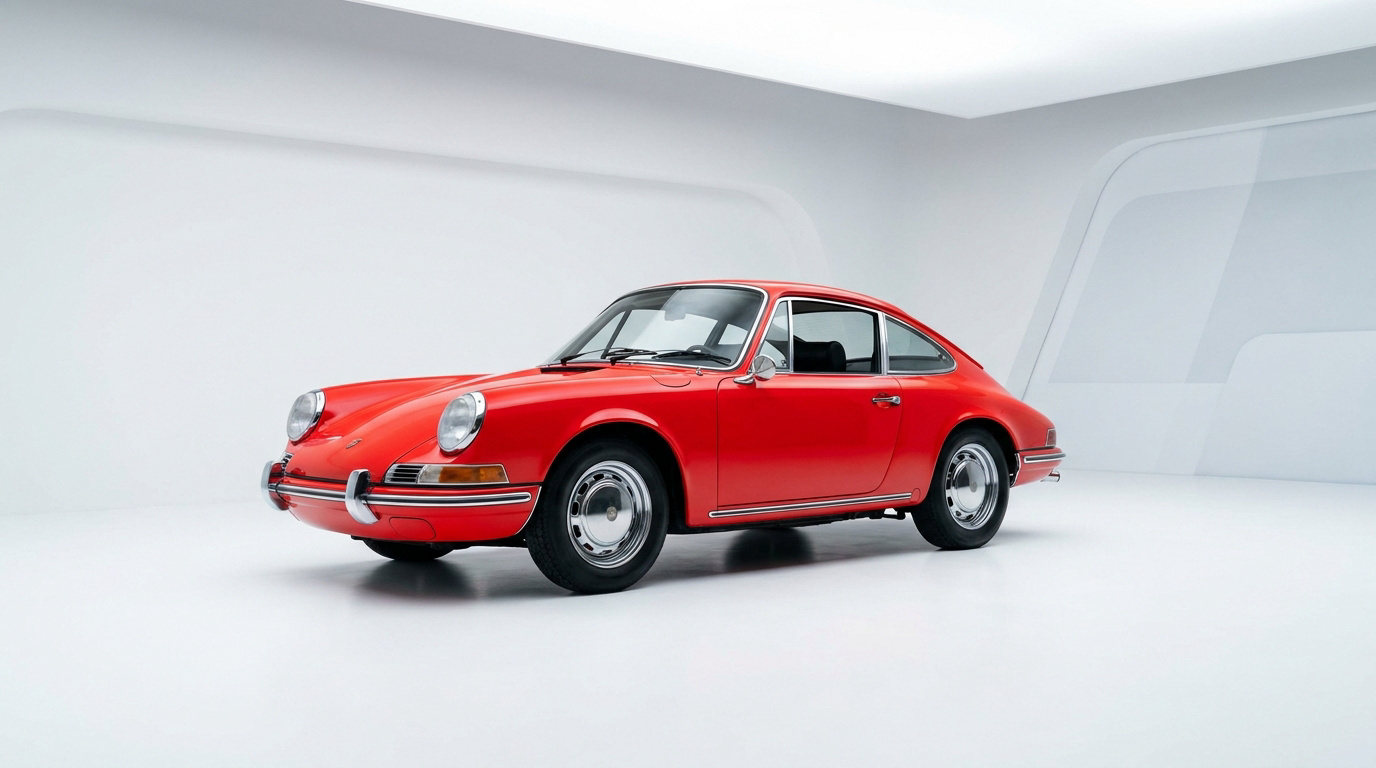
Key takeaway: The legendary Porsche 911 owes its iconic name to a 1964 legal dispute with Peugeot, which claimed exclusive rights to three-digit car names with a middle zero. Forced to pivot from the “901” designation, Porsche simply swapped the zero for a one. This pragmatic shift birthed a global brand identity that has now surpassed 1.2 million units produced.
The Porsche 911 debuted at the 1963 Frankfurt Motor Show as the 901, a designation reflecting its internal project number. But before the first production models could reach customers in 1964, a sudden legal hurdle forced one of the most famous rebrands in automotive history.
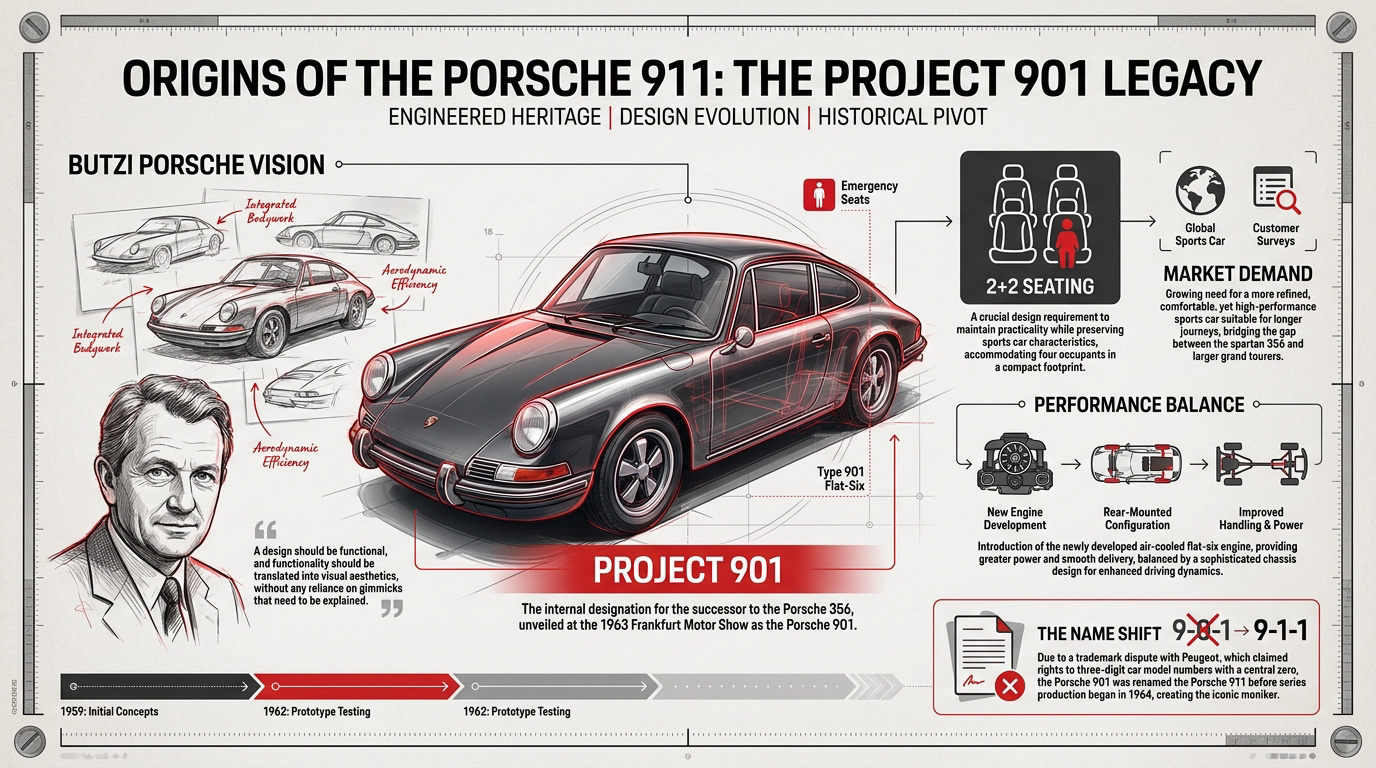
Peugeot claimed exclusive rights to three-digit car names with a central zero, leaving Porsche with a potential sales ban in the French market. To resolve the porsche 911 name dispute quickly, the factory simply swapped the zero for a one, and I find it fascinating how this pragmatic fix created such a legendary identity. We will explore how this trademark clash shaped the legacy of the Neunelfer.
- Origins of the Porsche 911 Name and Project 901
- Why Did Peugeot Object to the Original 901 Name?
- Marketing Consequences of the Sudden Badge Transition
- Design Evolution from the 356 to the Modern Silhouette
- Internal Use of the 901 Prefix for Spare Parts
- Cultural Impact and German Nicknames for the Neunelfer
- Mechanical Shifts from Air-Cooled to Water-Cooled Engines
Origins of the Porsche 911 Name and Project 901
The Porsche 911 debuted as the 901 at the 1963 Frankfurt Motor Show. A trademark dispute with Peugeot over middle-zero numbers forced the iconic name change in 1964, defining Ferdinand Butzi Porsche’s legacy.
Ferdinand Butzi Porsche and the 901 Project
The 901 designation emerged from internal project numbering during the late fifties. Early sketches from 1959 captured the Ferdinand “Butzi” Porsche vision. He sought a worthy successor for the 356.
Engineers focused on a technical shift toward a 2+2 seating arrangement. This layout provided necessary interior space. It addressed the growing market demands for a more practical, everyday sports car.
The initial prototype aimed for a clean, honest aesthetic. Project 901 served as the central theme for this development. Butzi prioritized a perfect balance between high performance and daily usability for drivers.
Moving Beyond the Legacy of the 356
By the early sixties, the 356 had reached its structural limits. Its aging platform could no longer support significant power increases. Comfort upgrades were also restricted by the original chassis dimensions.
Porsche recognized the urgent need for a sophisticated, modern chassis. They decided to contrast the four-cylinder heritage with a bold new direction. A six-cylinder future became the brand’s primary ambitious vision.
The new platform’s rigid design ensured a stable foundation for performance. This transition helped cement the enduring legacy of iconic classic convertible cars. The 356’s open-top success paved the way for this evolution.
Engineering Goals for the New Flat-Six Platform
Development of the Typ 901 engine was a massive undertaking. It functioned as a proof of concept for the brand. This air-cooled boxer six would eventually define Porsche’s mechanical identity.
In 1964, the performance targets were set exceptionally high. Engineers wanted to outperform the 356 Carrera 2. They focused on maintaining smooth power delivery across the entire rev range.
The mechanical layout utilized a rear-engine configuration for superior traction. This specific setup became the Porsche DNA through every subsequent generation. It remains a hallmark of the 911 series’ driving dynamics.
Why Did Peugeot Object to the Original 901 Name?
The 901 seemed perfect until it hit the public stage in Frankfurt, where a French giant was waiting to protect its territory.
The 1963 Frankfurt Motor Show Reveal
In September 1963, the 901 prototype finally met the world. This stunning newcomer immediately captivated the press. It was the undisputed star of the Frankfurt Motor Show.
The display car featured a non-operational engine mock-up. Even without a running heart, the design was breathtaking. This was enough to generate massive hype and early orders.
International journalists praised the sleek, fastback lines. They saw a worthy successor to the 356. Little did they know the 901 badge on the dashboard was already living on borrowed time.
Peugeot and the Middle Zero Trademark Claim
Peugeot soon launched a formal protest against the German manufacturer. They claimed exclusive rights to three-digit numbers with a zero in the middle. This applied strictly to automotive branding.
The legal logic was deeply rooted in history. Peugeot had used this naming convention since the 1929 launch of the 201. They weren’t about to let a German rival infringe.
France represented a critical region for high-end sports car sales. Porsche simply could not risk a total sales ban in Paris. A swift resolution was the only viable path forward.
Avoiding a Legal Battle in the French Market
Porsche chose pragmatism over a long legal fight. They realized that swapping the 0 for a 1 was the simplest fix. It was a brilliant, low-cost move to protect their future.
Production was already ramping up in Zuffenhausen. They had to act immediately to maintain momentum. They needed a solution before thousands of badges were cast in gold for the new models.
- Peugeot’s ownership of the middle zero
- The risk of being banned in France
- The cost of legal fees vs. renaming
- The final choice of the 911 badge
I find it fascinating how a simple legal threat birthed such an iconic name. While only 82 cars officially left the line as 901s, the 911 went on to define the brand. It just goes to show that sometimes, a forced change creates a legend.
Marketing Consequences of the Sudden Badge Transition
Changing a name is one thing, but updating the physical reality of a production line is a logistical nightmare.
Replacing the 901 Badges for the 1964 Launch
Creating new 911 scripts was a frantic race. Early cars were already rolling off the line. Workers had to swap badges manually on the assembly floor.
The physical characteristics were striking. The original scripts were gold-colored and slanted. They are now among the most coveted collector items in the automotive world.
This rapid hardware change is central to the Porsche name meaning. It shows how legal pressure forced a design pivot. The badge became a symbol of resilience.
Early Branding Materials and Brochure Updates
Early brochures featured the 901 text prominently. Porsche had to deal with a massive inventory of printed paper that was suddenly obsolete. It was a marketing disaster.
Rarity defines the 901 literature today. Finding an original 1963 pamphlet is like finding a needle in a haystack for Porsche enthusiasts. Most were lost to history.
Porsche handled existing stock with pragmatism. Some materials were simply overstamped with the new number. Others were destroyed, making surviving copies extremely valuable in the current market.
Impact on Global Brand Recognition and Strategy
The transition created a global icon. The 911 name quickly eclipsed its technical roots. It became a brand in itself, recognized on every continent.
Long-term benefits were immense. Having a unique, protected nameplate allowed Porsche to build a legacy without further legal interference from Peugeot or others. It secured their future.
| Feature | Project 901 (1963) | Porsche 911 (1964) |
|---|---|---|
| Badge Name | Gold-colored 901 script | Gold-colored 911 script |
| Intended Market | Global (Pre-dispute) | Global (Production standard) |
| Legal Status | Contested by Peugeot | Legally protected trademark |
| Production Status | 82 units produced as 901 | Full production from Sept 1964 |
Design Evolution from the 356 to the Modern Silhouette
Beyond the name, the car’s visual identity had to bridge the gap between the humble 356 and a new era of performance.
Visual Continuity from the 356 to the 911
The 911 didn’t kill the 356’s spirit. It evolved the “bathtub” shape into something more aggressive. I believe this continuity is what saved the brand’s soul.
Round headlights and a sloping rear were kept. These choices ensured brand recognition remained instant for enthusiasts. You can clearly see the family resemblance despite the larger, more powerful proportions.
The fastback profile was a major shift. It allowed for a more aerodynamic shape. Crucially, it provided the necessary space to accommodate the new flat-six engine within that iconic frame.
Iconic Features Like the Fastback and Front Wings
The sloping roofline was truly revolutionary. It improved aerodynamic efficiency by allowing air to flow smoothly. This design reduced drag significantly compared to the more upright stance of the 356.
Independent front wings define the car’s face. These “hips” became a signature design element for every generation. To me, they give the 911 its predatory yet sophisticated look on the road.
Rear vents served a vital functional purpose. The air-cooled engine needed massive amounts of cooling. Consequently, the grille design became a canvas for mechanical art that we still admire on modern iterations.
Establishing the Rear-Engine Layout as Brand DNA
Putting the weight over the rear wheels provided unrivaled traction. This configuration allowed for incredible grip during acceleration. It created a unique driving experience that requires real skill to master.
The boxer engine’s flat design was key. It ensured a low center of gravity. This allowed the 911 to corner with precision, staying planted where other sports cars might struggle or drift.
This classic silhouette remains relevant today. It even appears in modern pop culture, like the Porsche 911 transformers. The 911 name has truly become an immortal benchmark in automotive history.
Internal Use of the 901 Prefix for Spare Parts
While the public saw the 911, the factory floor was still operating under the shadow of the 901 code for years.
The 901 Part Prefix in Internal Catalogs
Porsche kept 901 prefixes for thousands of parts. Changing every catalog entry was simply too expensive. The firm chose efficiency over total rebranding.
Mechanics and engineers were already trained on 901 numbers. The internal workflow remained untouched by the marketing change. It prevented chaos in the warehouse.
Gearboxes and engine blocks often carried the 901 stamp well into the late 1960s. It remains a secret handshake for vintage restorers. I find this technical persistence quite charming. It shows the pragmatic side of the brand.
Rare 901-Badged Cars That Reached the Public
Only a handful were produced before the switch. Exactly 82 cars were built under the 901 designation. These are the holy grails of Porsche collecting.
A real 901 chassis can fetch millions. Collectors look for specific early 1964 dates and unique dashboard details. These vehicles were originally for testing and exhibitions.
It’s all in the chassis number and the original gold badges. These cars represent the purest form of the original project. Owning one is like holding a piece of forbidden history. It is the ultimate “claque” for any serious enthusiast.
The 912 Model as a Bridge for 356 Enthusiasts
It used the 356’s four-cylinder engine in the new 911 body. It was the entry-level successor many fans wanted. It bridged the gap between two eras.
The 912 was lighter and cheaper. It helped transition traditional buyers who weren’t ready for the expensive flat-six. Porsche needed this volume to survive the transition.
While it looked like a 911, the handling was different due to the lighter rear. It remains a classic icon. I’ve always admired its balance. It proves that more cylinders aren’t always better.
Cultural Impact and German Nicknames for the Neunelfer
The 911 eventually moved past legal disputes and technical codes to become a deeply emotional part of German culture.
Neunelfer and German Colloquial Terminology
Germans often use the term Neunelfer. While the official name is Neunhundertelf, they shortened it. This nickname sounds more personal and affectionate.
Linguistic nuances matter here. Saying “The Nine-Eleven” in German feels mechanical. “Neunelfer” feels like a trusted friend.
The emotional connection is undeniable. This car is a staple of the Autobahn. To many Germans, it represents the peak of achievement and engineering freedom.
Resonating with German Engineering and Car Culture
The 911 is a symbol of national pride. It serves as the ultimate benchmark. It proves that form follows function in the most beautiful way.
Its media presence is massive. From movies to posters, the 911 is everywhere. It’s the standard-bearer for sports cars.
Every rival is measured against it. The 911 remains the soul of the brand despite the rise of SUVs. I believe its spirit is untouchable.
Comparing Naming Conventions with Other Porsche Models
Contrast this with later models like the 928. While Porsche tried new names, they always returned to the 900-series logic. Fans simply expect it.
Modern names like Taycan break the mold. These are bold choices. Yet, the three-digit legacy remains the most powerful marketing tool.
Heritage names carry immense weight compared to Porsche Formula E designations. The classic numbers still define the brand’s true essence today.
Mechanical Shifts from Air-Cooled to Water-Cooled Engines
The story of the 911 is one of constant evolution, where even the most sacred traditions eventually had to change.
Milestones from the G-Series to the 992
From the G-Series to the 992, the 911 evolved. Each step added modern tech without losing the original soul. Eight generations have now refined this legendary formula for enthusiasts worldwide.
The Targa body style was a clever response to safety laws. It became an iconic silhouette in its own right, beloved by collectors.
Digital cockpits and active aero are now standard in the 992. Yet, the rear-engine layout remains the heart of the machine. It is a brute technical achievement that stays true to its roots.
Transitioning from Air-Cooled to Water-Cooled Systems
The 996 generation introduced water-cooling in 1998. Purists were shocked, but it was a necessary move for performance. I believe it was the only way to keep the legend alive.
Emissions laws made air-cooling impossible. Water-cooling allowed for four-valve heads and more power. This shift ensured the 911 could meet modern global regulatory standards.
The mechanical “clatter” was gone after this transition. In its place came a more refined roar that modern drivers have come to love. It is a different, yet equally thrilling, acoustic experience.
Iconic Design Elements Like the Ducktail Spoiler
First seen on the Carrera RS, the ducktail was pure aerodynamic genius. It kept the rear planted at high speeds. This 1972 innovation remains a masterclass in functional design.
Fuchs wheels are equally legendary. These five-spoke alloys are the visual signature of a classic 911. They represent the perfect marriage of lightweight engineering and timeless style.
Porsche often brings back these elements for special editions today. It’s a way to honor the 901 origins in a modern world. We see this heritage shine in the latest Sport Classic models.
Born from a trademark dispute with Peugeot, the transition from Project 901 to the iconic 911 moniker defined a global legend. This tactical shift preserved Porsche’s DNA, blending Butzi’s fastback vision with a powerful flat-six future. Secure your piece of history by mastering the porsche 911 name legacy today. The Neunelfer’s soul remains timeless.