
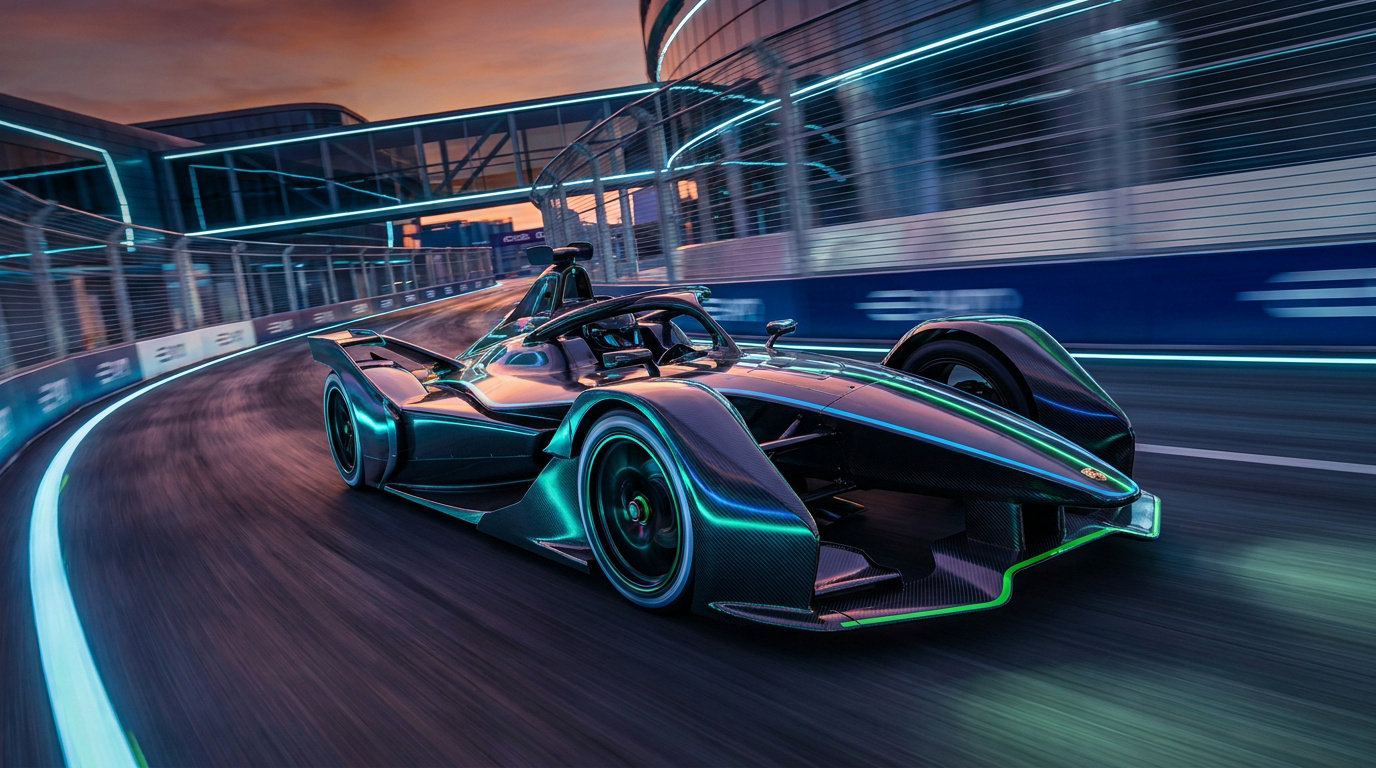
The Porsche 975 RSE is capable of reaching 100 km/h in a staggering 1.8 seconds, a figure that officially places electric racing performance on par with Formula 2 machinery. This GEN4 beast marks the most significant leap in the history of the series, transforming the track into a high-speed laboratory where 600 kW of pure power meets permanent all-wheel drive.
I often find that fans struggle to reconcile the silent nature of electric motors with the raw aggression required for elite motorsport. We are going to explore how this new technical package bridges that gap, as I break down the engineering milestones that make this Porsche a genuine game-changer for the 2026 season.
- Why the Porsche Formula E 975 RSE Redefines Electric Racing
- 3 Technical Breakthroughs Powering the GEN4 Beast
- Does the New Aero Kit Sacrifice Style for Speed?
- Track Testing Milestones and the 2026 Roadmap
Why the Porsche Formula E 975 RSE Redefines Electric Racing
The Porsche 99X Electric Gen3 Evo hits 100 km/h in 1.82 seconds, outperforming current Formula 1 acceleration. With a 335 km/h top speed and 600kW Attack Mode, this AWD beast sets new electric performance benchmarks.
The last fact about acceleration leads directly into the technical breakdown of the sub-two-second sprint.
Breaking the Two-Second Acceleration Barrier
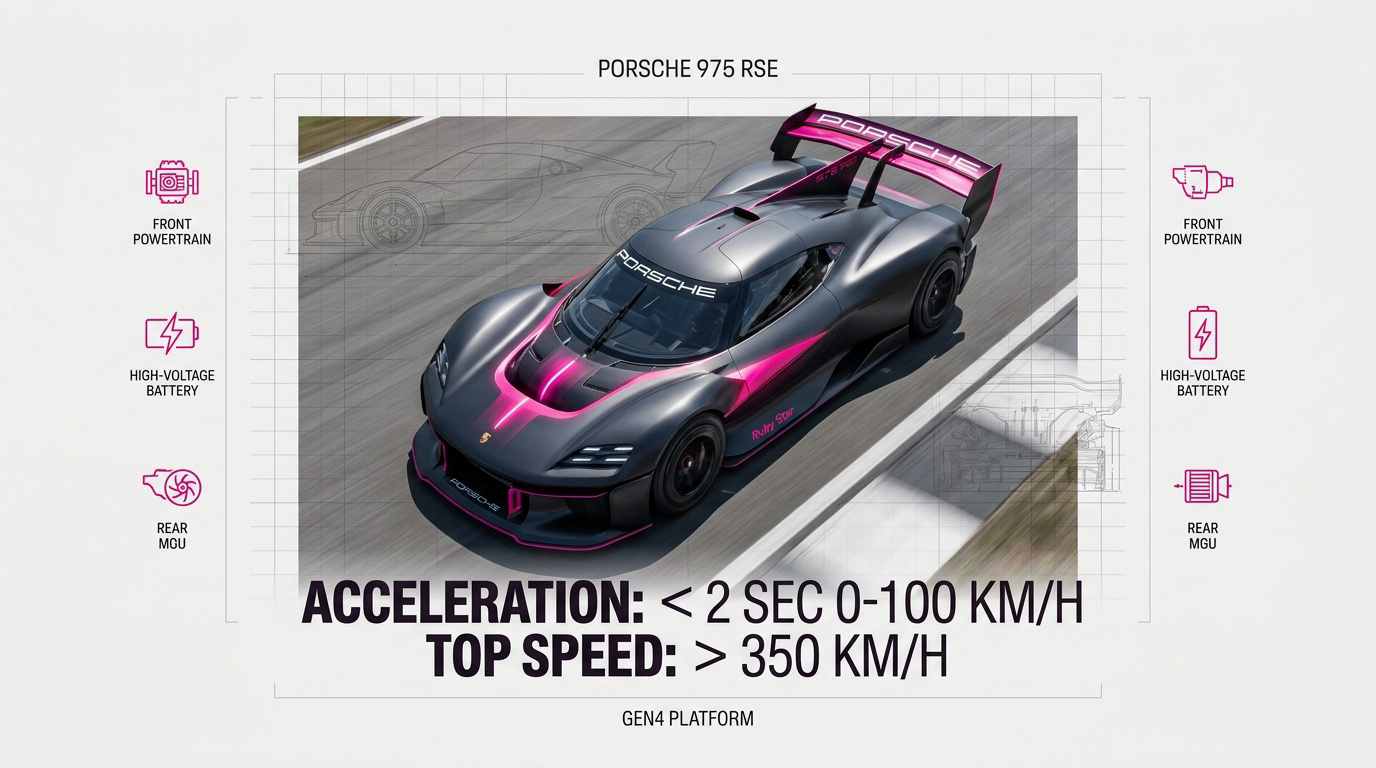
This 1.8-second sprint relies on pure physics. Engaging the front powertrain provides the massive grip needed to launch. It makes Formula 2 cars look almost sluggish.
The sensation of instant torque is a total claque. This isn’t just for show; it creates a massive gap during race starts. We are seeing the mechanical advantage of the new Evo package in action.
Ultimately, the performance delta is undeniable. It secures its spot as the quickest accelerating FIA single-seater currently in competition.
Chasing Formula 2 Benchmarks on Track
Reaching a 335 km/h top speed is a serious statement. While street circuits rarely allow such peaks, the aerodynamic efficiency is clearly on another level. It’s a brute technical achievement.
During Attack Mode, the 600 kW output is simply staggering. Jumping from 350 kW requires intense thermal management to survive the burst. It’s a high-stakes game of energy and heat.
When compared to combustion-based series, the progress is obvious. The 99X Electric is rapidly closing the lap-time gap on permanent tracks. It’s no longer just a laboratory.
The GEN4 platform foundation starts here. These metrics are truly impressive.
3 Technical Breakthroughs Powering the GEN4 Beast
While raw speed grabs the headlines, the underlying engineering shifts represent a massive leap in electric powertrain philosophy.
Permanent All-Wheel Drive Integration
The Porsche 975 RSE finally adopts AWD for qualifying sessions and race starts. This marks a departure from the RWD 99X Electric. Traction during corner exits is significantly improved.
This setup transforms driver confidence. The front motor now actively aids propulsion instead of just handling energy recovery. Consequently, drivers must adapt their racing line and braking strategies to this new grip.
Everything feels tighter. Traction control software is now the primary focus for our engineers.
Massive Energy Recuperation at 700kW
The car achieves a staggering 700kW recuperation capacity. Nearly half the energy required for a race originates from regenerative braking. It represents a monumental efficiency gain.
A sophisticated brake-by-wire system manages the deceleration. It seamlessly blends friction brakes with motor resistance for maximum stability. This balance is vital on bumpy, unforgiving street circuits.
The technical specs are truly impressive:
- 700kW total regen power
- 350kW front/350kW rear split
- 50% energy recovery target
- Carbon-fiber brake discs integration
Software Refinement and Powertrain Evolution
We see a 71 percent power increase compared to the Gen2 era. The secret lies in the silicon carbide inverters. Porsche develops these critical components directly in Weissach.
Engineers have optimized the wiring harness to shed weight. Saving mass within the powertrain allows for superior ballast placement. This refinement lowers the car’s overall center of gravity.
The software updates are relentless. Precise coding ensures peak energy management during those intense final laps.
Does the New Aero Kit Sacrifice Style for Speed?
Beyond the internal hardware, the external silhouette of the Porsche 99X Electric has undergone a radical transformation to handle the extra power.
Dual-Kit Strategy for Varied Circuits
The Porsche 975 RSE boasts a 150 percent downforce increase. We now see a split between qualifying kits and race configurations. The low-drag setup remains vital for energy saving.
Engineers fine-tune the aero balance for Monaco versus tracks like Portland. This adjustable elements flexibility is a first. It allows for surgical precision depending on the layout.
The drag reduction is impressive. Even with more wings, the car maintains top-end velocity on long straights.
From Space-Shuttle Aesthetics to Raw Muscle
The visual shift is undeniable. The F2-style rear wing replaces the futuristic “wedge” look. It looks more like a traditional racer than a concept car.
Pascal Wehrlein noted the car feels more “planted” in corners. Nico Müller echoed this during initial shakedowns. They both relish this aggressive “brute technique” approach.
| Feature | Gen3 Design | Gen3 Evo (New) | Benefit |
|---|---|---|---|
| Front Wing | Minimalist | Imposing | Maximum grip |
| Rear Wing | Wedge | F2-style | Stability |
| Sidepods | Compact | Extended | Airflow |
| Bodywork | Narrow | Muscular | Balance |
Track Testing Milestones and the 2026 Roadmap
Designing a fast car is one thing, but validating it through thousands of kilometers is where championships are actually won.
Validation Through Rigorous Spanish Testing
The team completed 1,860 kilometers of intense testing in Spain. We focused on the reliability of the new battery pack. Porsche pushed the car to its thermal limits in Mallorca.
Engineers used advanced simulators at Weissach. These digital twins allow drivers to prep for new tracks. It bridges the gap between data and reality.
The correlation was impressive. Data from the Spanish sun matched virtual models perfectly. This gives the team a head start.
Six-Car Deployment and Championship Goals
Our six-car plan is ambitious. Porsche will supply its powertrain to customer teams like Andretti. This triples the data points available for software refinement every single weekend.
I find the token-based upgrade system fascinating. Hardware is frozen for specific periods, so software optimization is the only way to gain an edge. Porsche plans to dominate until the GEN4 era.
The goal is clear. We want world championship titles for both factory and customer outfits.
With its 1.8-second sprint and 600kW output, the Porsche 975 RSE successfully bridges the gap between electric innovation and Formula 2 performance. This AWD evolution promises a thrilling future for fans as track testing validates its dominance. Experience the next era of racing when this electric beast debuts in 2026.