
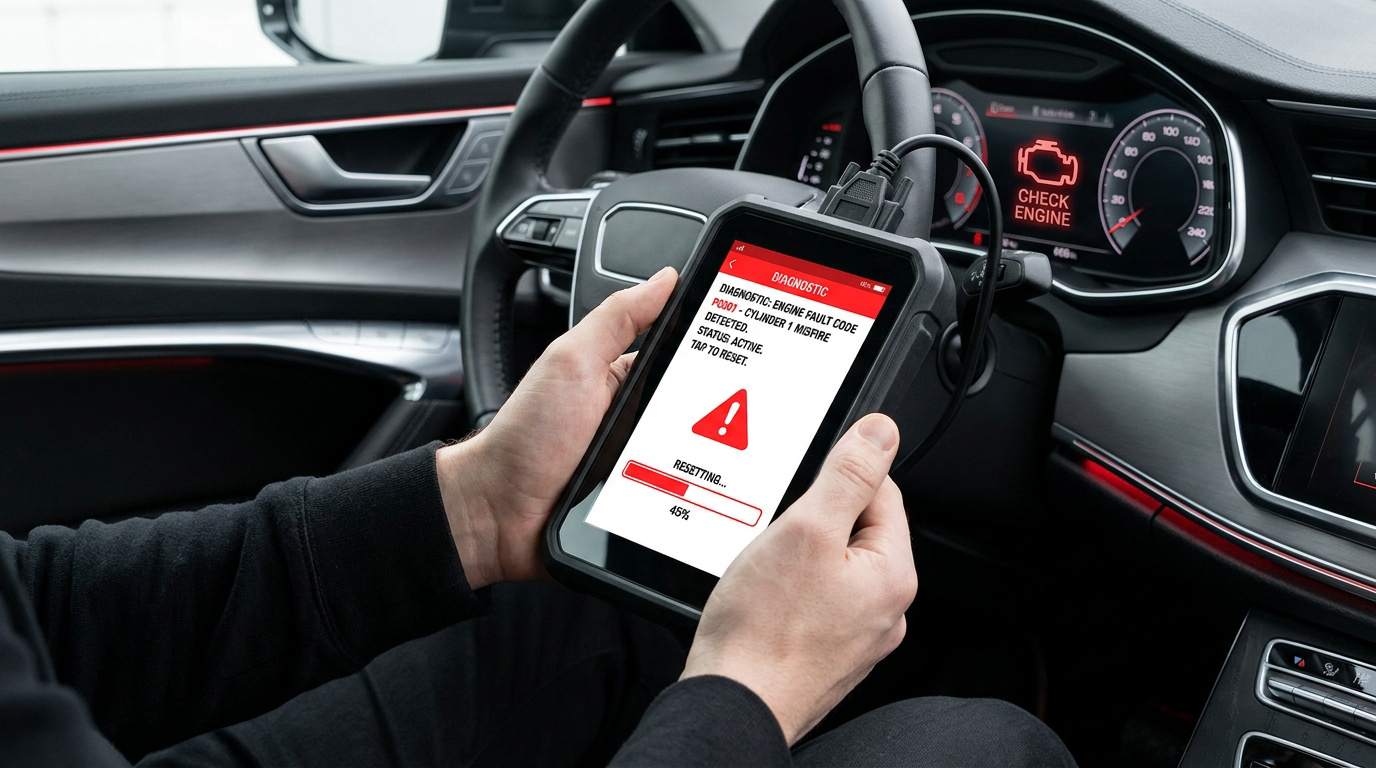
Key takeaway: A flashing check engine light signals a critical misfire that can destroy your catalytic converter in minutes, requiring an immediate stop. While a steady glow often points to minor sensor issues or a loose gas cap, using a professional OBD-II scanner is the only reliable way to identify fault codes and ensure a safe, permanent repair.
A simple loose gas cap is the culprit behind a significant portion of dashboard warnings, yet that glowing orange icon often triggers immediate anxiety for any driver. When your car detects a fault within the EVAP system or a sensor malfunction, it logs a specific code that stays until addressed. You might feel tempted to ignore it, but a persistent light usually signals an underlying issue that could compromise your fuel efficiency or long-term engine health.
I will show you how to reset engine light using professional diagnostic tools and manual techniques to ensure your vehicle returns to peak performance. We will explore the safest methods to clear these alerts while verifying that your repairs actually fixed the root cause.
- Deciphering the Engine Light and Its Hidden Warnings
- Using an OBD-II Scanner to Reset Engine Light Safely
- Manual Reset Methods and the Battery Terminal Debate
- Why the Engine Light Returns After a Successful Reset
Deciphering the Engine Light and Its Hidden Warnings
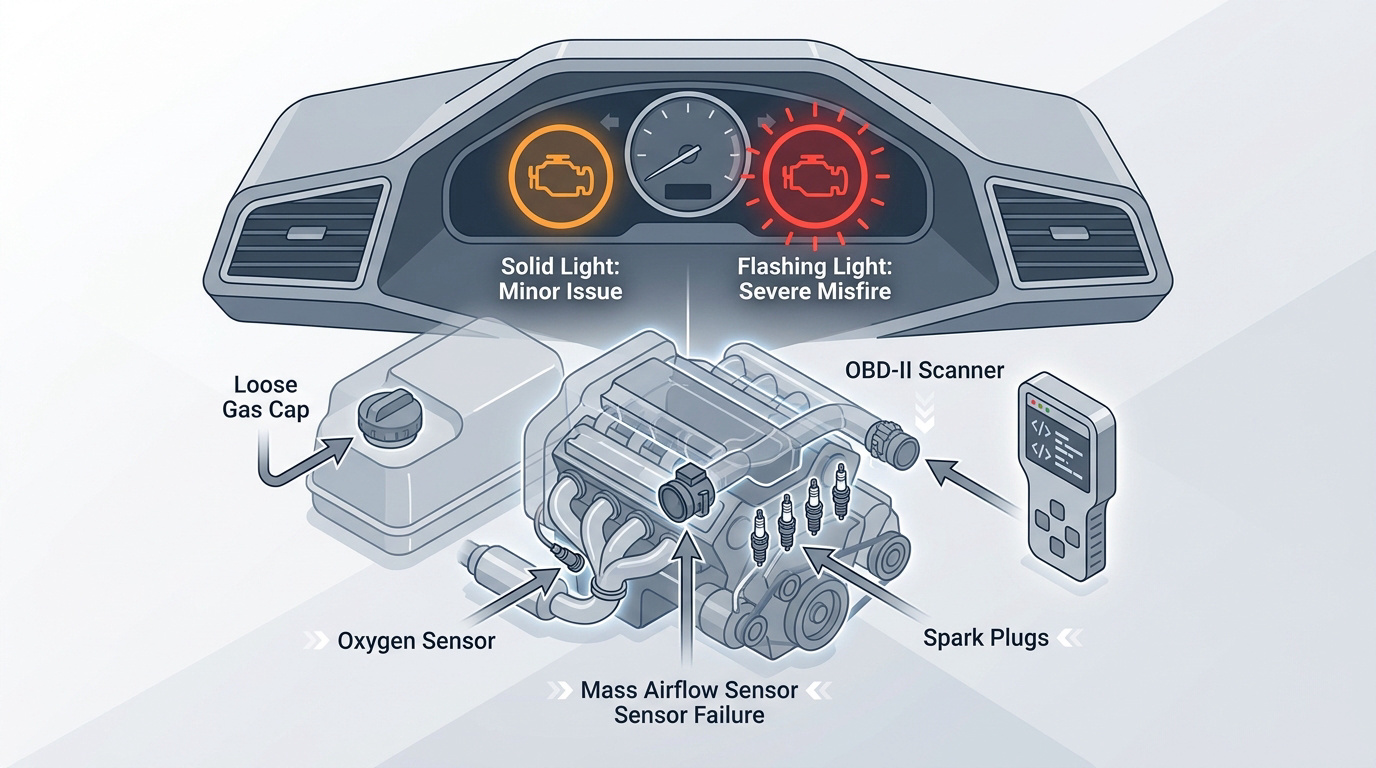
A steady orange light indicates minor sensor issues or a loose gas cap, while a flashing icon signals severe misfires risking immediate catalytic converter destruction. Professional OBD-II scanners identify these specific fault codes.
The visual behavior of the light dictates whether you can keep driving or must pull over immediately to prevent engine melting.
Steady Glow vs. the Dreaded Flashing Signal
A solid light signals a non-emergency issue. You can usually drive cautiously to a nearby garage. It often relates to emissions systems rather than immediate mechanical failure.
A flashing light is a severe warning. It indicates a major engine misfire. Raw fuel enters the exhaust system. This intense heat destroys your expensive catalytic converter in minutes.
Find a safe spot to park. Turn off the engine immediately. This prevents catastrophic internal damage to your vehicle.
Identifying the Culprit: From Loose Caps to Sensor Failure
A loose gas cap is a classic culprit. It breaks the EVAP system seal. This system monitors fuel vapors. It remains the most common trigger for a warning.
Faulty oxygen sensors or mass airflow meters disrupt the air-fuel ratio. Performance drops noticeably. Fuel consumption spikes. You can find more maintenance tips on our Ferrari blog.
Worn spark plugs cause engine hesitation. This triggers specific misfire codes. Here are the usual suspects found during a diagnostic scan:
- Loose gas cap
- Faulty O2 sensor
- Mass Airflow Sensor failure
- Worn spark plugs
- Failing catalytic converter
Using an OBD-II Scanner to Reset Engine Light Safely
Visual checks only go so far, so it is time to plug in some hardware to see what the car is actually complaining about.
Connecting the Tool and Extracting Diagnostic Trouble Codes
Locate the 16-pin port. It is usually under the dash near the steering wheel. Plug the scanner in firmly. Ensure the connection is secure before proceeding further.
Turn the key to the “ON” position. Do not start the engine. This allows the scanner to talk to the ECU.
Read the alphanumeric codes. These five-character strings tell the story. They pinpoint exactly where the fault lies within the system.
Selecting the Right Scanner for High-End Performance Cars
Compare scanner types. Basic tools only read generic codes. High-end cars like a Porsche blog – Ferrari Movie need bi-directional tools. These can trigger specific tests.
Mention Bluetooth dongles. These pair with your phone. They are great for mobile diagnostics. Check for compatibility with Italian or German electronics before buying.
Clearing the Code and Documenting Findings for Your Mechanic
Hit the erase button. The scanner will clear the fault memory. The dashboard light should disappear instantly.
Record everything first. Take a photo of the screen. Save the freeze-frame data. This shows the engine conditions when the fault happened.
Share this with your pro. Mechanics love data. It saves them time. It saves you money on diagnostic labor.
Manual Reset Methods and the Battery Terminal Debate
If you don’t have a scanner handy, you might be tempted by old-school tricks, but modern electronics are far more sensitive than vintage steel.
Risks of Disconnecting the Battery on Modern Electronics
Pulling the battery cable is risky. You lose volatile memory. This affects radio presets and seat positions. In high-end cars, it can lock the infotainment system.
Calibration issues often follow. Electric steering might feel heavy. Power windows might lose their auto-up function. You create more problems than you solve.
It often fails anyway. Permanent codes stay in the non-volatile memory. The light will just pop back on later.
Mastering the Drive Cycle to Verify the Fix
The drive cycle is a specific routine. You must drive at varied speeds. The computer runs self-tests on every system. It needs time to verify the repair.
Speed matters here. Some tests only run at highway speeds. Others require idling. Follow the manufacturer’s specific guide to complete the cycle properly.
Be patient with the ECU. It might take fifty miles. Only then will the “Ready” monitors turn green.
Why the Engine Light Returns After a Successful Reset
Seeing that orange glow return after a reset is frustrating, yet it usually points to a deeper mechanical reality you cannot ignore.
Distinguishing Maintenance Reminders From Mechanical Faults
Learn the difference. A service light means you need an oil change. The check engine light means a sensor detected a failure. They are not the same thing.
Clearing a code is not a repair. If the hardware is broken, the sensor will trip again. This usually happens within minutes of your next drive.
Fix the part. Do not just delete the warning. Safety comes first.
Preparing for Emissions Testing After a System Clear
Do not rush to the inspection station. A reset creates a “Not Ready” status. The inspector will see this immediately. You will fail the test automatically.
Complete the drive cycle first. This confirms the fix. Ensure all monitors are set before arriving. Contact Ferrari-Movie.com pour plus de conseils.
| Status | Meaning | Can Pass Emissions? |
|---|---|---|
| Ready | Tests complete | Yes |
| Not Ready | Cycle incomplete | No (Drive more) |
| Fault Present | Issue detected | No (Repair needed) |
Drive cycles vary. Most require steady cruising. This verifies your repair.
Mastering how to reset engine light warnings requires identifying the fault via OBD-II, performing the necessary repair, and completing a specific drive cycle. By avoiding risky battery disconnections, you ensure your vehicle’s sophisticated electronics remain calibrated and ready for emissions testing. Act now to protect your catalytic converter and enjoy a flawless, high-performance drive.