
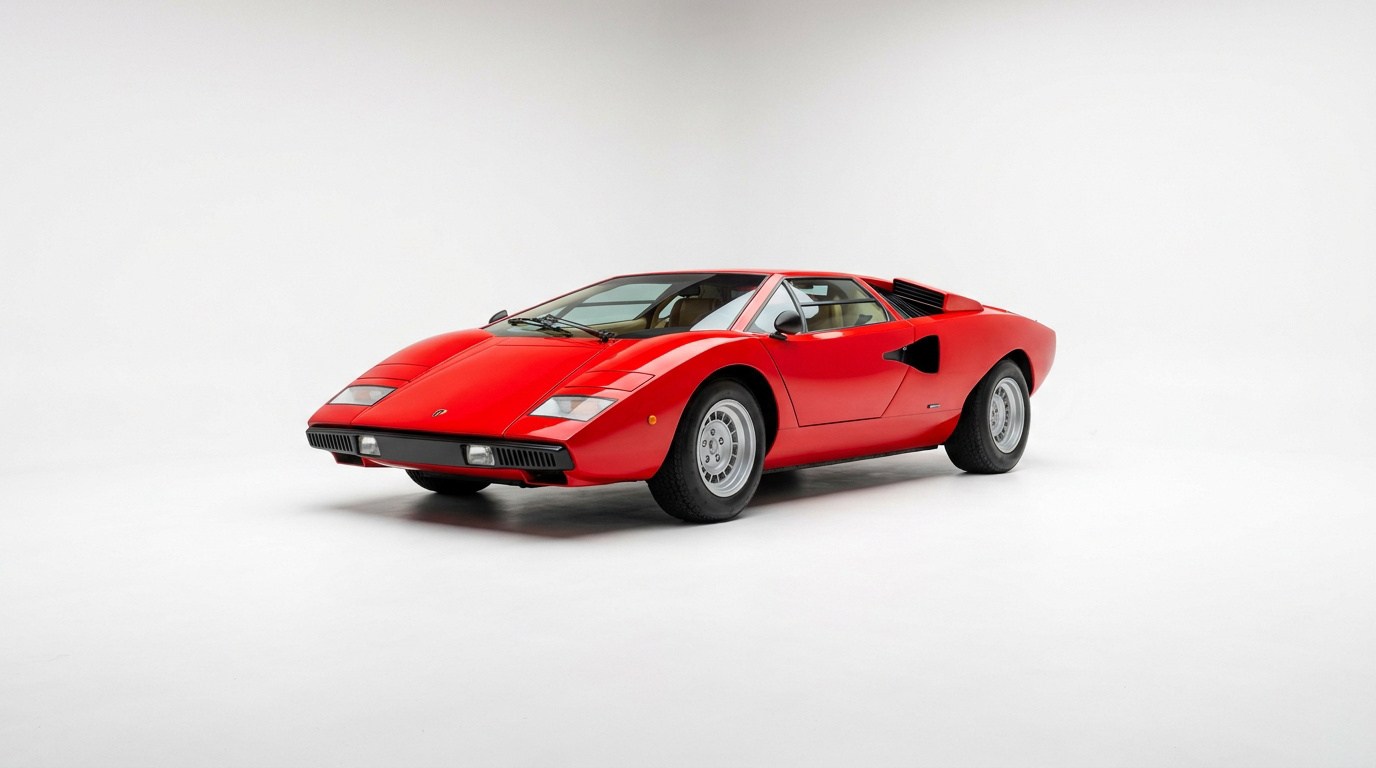
Key takeaway: The Lamborghini Countach revolutionized automotive design by introducing the “Italian Wedge” silhouette and iconic scissor doors. Beyond its radical Bertone styling, its mid-engine longitudinal V12 layout and tubular space frame prioritized mechanical balance over comfort. This legendary supercar evolved from the pure LP400 to the 455 HP Quattrovalvole, defining the modern flagship blueprint for decades.
Can a single silhouette redefine the limits of automotive geometry for over half a century? With its radical wedge profile and those iconic scissor doors, the 1971 LP500 prototype did not just succeed the Miura, it shattered every existing design convention to become the ultimate poster car.
Owning such a legend often means wrestling with a heavy clutch and non-existent rear visibility. I will guide you through the lamborghini countach design specs and technical evolutions to help you understand how this brutal Italian masterpiece transformed from a clean Marcello Gandini concept into the high-performance 5000 QV.
- Lamborghini Countach Design Specs and the Italian Wedge Revolution
- Mechanical Guts: The Longitudinal V12 Layout
- 5 Major Iterations from LP400 to the 25th Anniversary
- Engineering Battles: Cooling, Safety, and US Regulations
- How Does a Countach Perform in Real-World Conditions?
Lamborghini Countach Design Specs and the Italian Wedge Revolution
The Lamborghini Countach, produced between 1974 and 1990, redefined automotive aesthetics through Marcello Gandini’s wedge profile, a longitudinal V12 engine, and trademark scissor doors. These technical choices prioritized aerodynamics and mechanical balance over traditional comfort.
The transition from the Miura’s curves to the Countach’s sharp edges represents a pivotal moment in my view of automotive history.
Marcello Gandini and the Bertone Influence
Marcello Gandini radically departed from the Miura’s soft curves. He focused on the sharp, aggressive lines of the LP112 project. This shift created a brutal, futuristic silhouette that still shocks today.
Conceptual roots trace back to the Lancia Stratos Zero and Alfa Romeo Carabo. These Bertone prototypes birthed the “Italian Wedge.” I believe this geometry fundamentally altered the trajectory of supercar design.
Scissor Doors: Functional Necessity or Pure Theater?
The doors weren’t just for show. The extreme width and massive door sills made traditional hinges impossible in tight spaces. It was a spatial solution. I find it brilliant that such theater originated from a genuine engineering constraint.
The mechanical upward swing is iconic. Gas struts allow the door to clear the front fender smoothly. It remains a signature Lamborghini element.
The Periscopio System and Rear Visibility Solutions
Early LP400 models featured a roof-mounted mirror notch. This “Periscopio” was a desperate fix for the non-existent rear view. It is, quite frankly, a charmingly eccentric solution to a major design flaw.
The system eventually disappeared. Later models used larger side mirrors and different engine covers. This made the complex roof channel obsolete. It was simply too expensive and complicated to continue producing.
Mechanical Guts: The Longitudinal V12 Layout
The striking exterior was only half the story, as the real magic happened beneath the aluminum skin with a revolutionary engine orientation.
Advantages of the LP Configuration
The “Longitudinale Posteriore” (LP) setup replaced the Miura’s transverse engine. This longitudinal alignment eliminated the unpredictable weight shifting during hard cornering. It significantly stabilized the car’s handling dynamics.
We see the gearbox sitting right between the seats. This clever placement centralized the mass effectively. It also shortened the shift linkage, providing a much more direct mechanical feel.
This layout improved cooling airflow. It specifically allowed for efficient side-mounted radiators.
Tubular Space Frame: Lightweight Rigidity
I find the complex birdcage of steel tubes absolutely fascinating. This chassis provided immense structural strength while remaining surprisingly light. It was a racing-derived technique for a road-going supercar. The engineering here is a real technical brute.
The hand-beaten aluminum body panels are pure art. These were riveted and welded to the frame. This process saved precious kilograms for better performance.
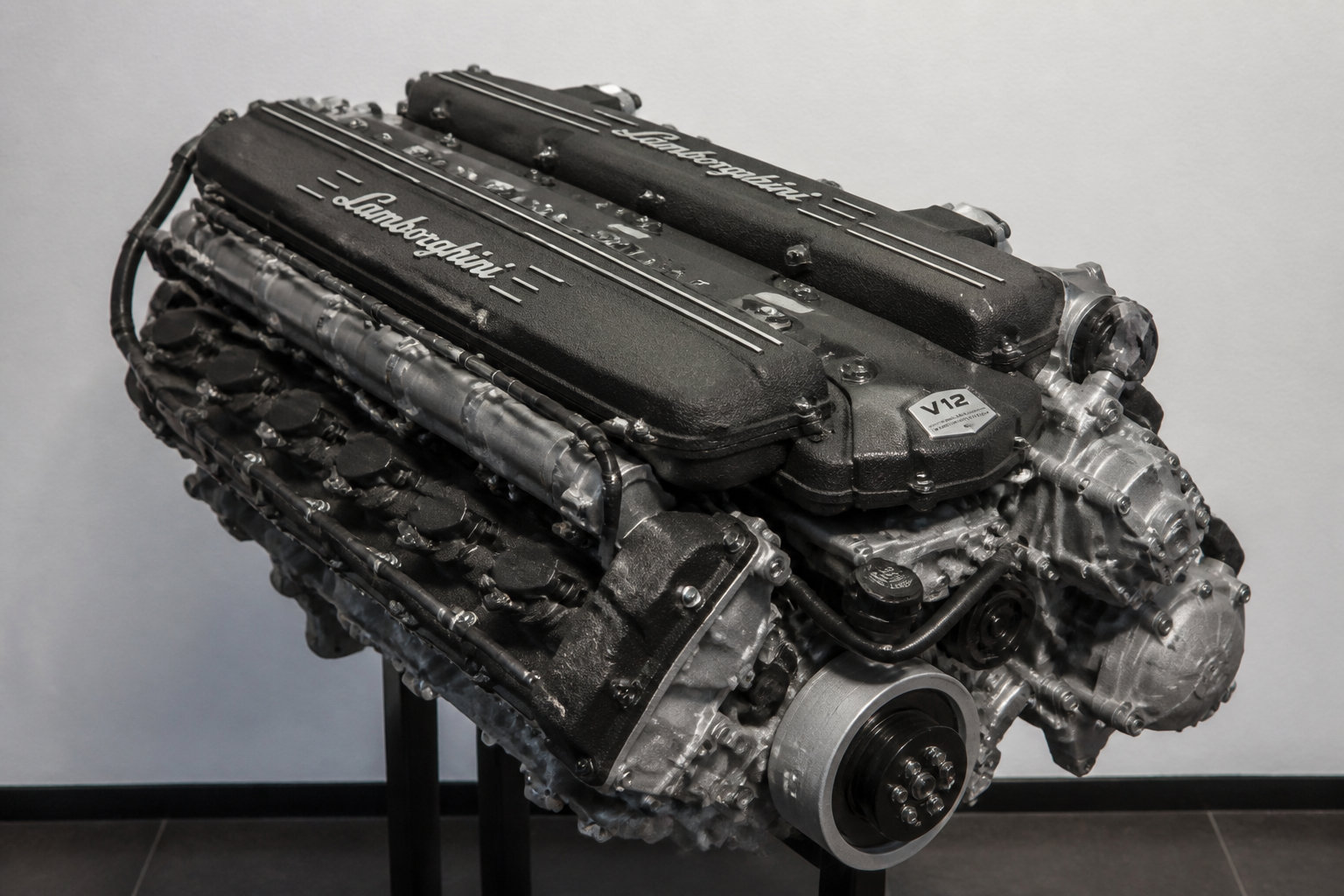
This structure remains a true successor to the Countach chassis legacy. It defined Lamborghini’s DNA.
Transmission Placement and Weight Distribution Secrets
The power path is quite unique. It goes forward to the gearbox. Then, it travels back through a tunnel in the sump to the rear wheels.
Keeping heavy components within the wheelbase reduced the polar moment of inertia. This made the car rotate more predictably. It transformed the driving experience into something truly sharp.
| Model | Engine | Power (HP) | Top Speed |
|---|---|---|---|
| LP400 | 3.9L V12 | 375 HP | 290 km/h |
| 5000 QV | 5.2L V12 | 455 HP | 295 km/h |
| 25th Anniversary | 5.2L V12 | 455 HP | 295 km/h |
| LPI 800-4 | 6.5L V12 Hybrid | 814 HP | 355 km/h |
5 Major Iterations from LP400 to the 25th Anniversary
While the mechanical core remained a V12, the car’s personality shifted drastically through five distinct production phases.
LP400 Periscopica and the Pure Original Form
I admire the clean lines of this first series. It features no wings or flares. The design relies solely on pure Gandini geometry and narrow Michelin XWX tires for speed.
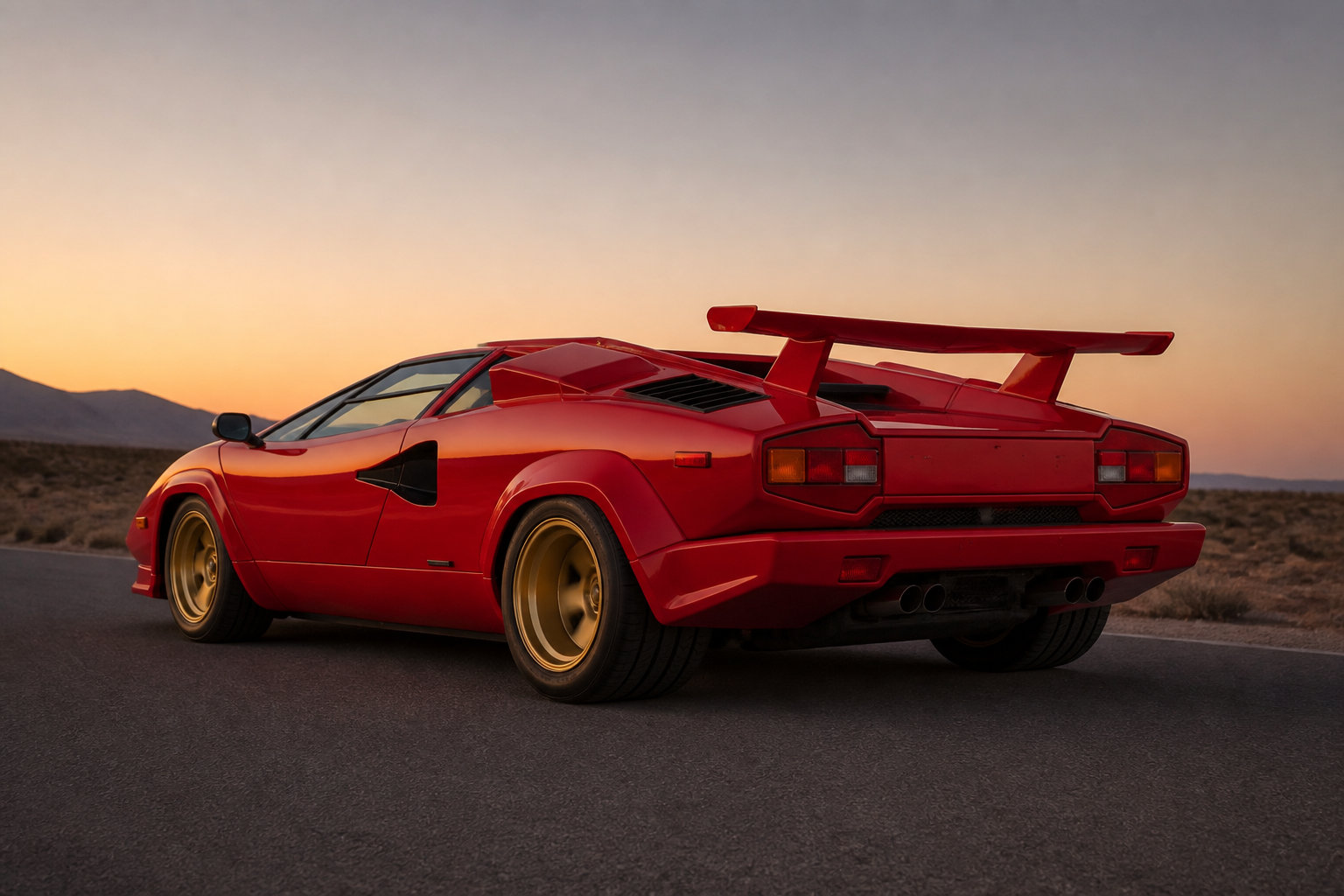
Contrast this with the later “boy racer” versions. The original focused on aerodynamic efficiency. It remains the most valuable choice for collectors today.
Check out specific collector guides for the LP400. These early cars are truly rare gems.
The 5000 QV and the Move to Four Valves
The 5.2-liter engine overhaul changed everything. Those “Quattrovalvole” heads allowed the V12 to breathe much better. We saw output push to 455 horsepower. It was a massive performance jump for the mid-80s.
Notice the engine cover hump? The downdraft carburetors required more vertical space. This modification changed the rear silhouette forever.
The 25th Anniversary model arrived later as the final evolution. It added even more aggressive body cladding.
Walter Wolf Specials: Paving the Way for the S Models
The Canadian billionaire’s influence was massive. Wolf wanted more grip and wider Pirelli P7 tires. He commissioned custom flared wheel arches and large rear wings for his cars.
Lamborghini quickly adopted these changes. The factory realized the “Wolf look” was exactly what customers wanted. This led directly to the LP400 S production.
Here are the key features from those commissions:
- Wolf Special features: 5.0L engine upgrade
- Adjustable rear wing
- Flared arches
- Campagnolo wheels
Engineering Battles: Cooling, Safety, and US Regulations
Keeping the Countach on the road wasn’t just about speed; engineers fought constant battles against heat and international laws.
Solving the Overheating Issues of Early Prototypes
The early prototypes literally cooked their engines. The smooth body didn’t allow enough air into the radiators. This caused massive failures during initial road tests.
NACA ducts and large air boxes were the solution. These functional additions broke the clean lines but were vital. Thermal management became a priority for Lamborghini.
Side scoops evolved. They grew larger with every new iteration.
Impact of US Emissions and Safety Bumpers
US safety laws forced Lamborghini to add heavy rubber blocks to the front. It ruined the car’s sharp nose. Many owners removed them immediately to restore the original aesthetic.
Meeting American smog standards meant detuning the glorious V12. Power dropped significantly for the US market compared to European versions. It was a painful compromise.
I find that understanding these constraints helps appreciate modern Lamborghini emissions standards and how far engineering has come.
Transitioning from Carburetors to Fuel Injection
Six Weber carburetors provided a raw, visceral sound. However, they were a nightmare to keep synchronized. Mechanics spent hours tuning them for peak performance.
Fuel injection made the Countach start on the first turn. It lost some soul but gained much-needed civility for daily use. Reliability finally became a reality.
- Weber pros: Sound, raw power
- Bosch pros: Cold starts, emissions, fuel economy
How Does a Countach Perform in Real-World Conditions?
Beyond the specs and engineering hurdles lies the actual experience of wrestling this beast on a public road.
Taming the Heavy Clutch and Gated Shifter
Driving this icon is a serious physical workout. The clutch pedal feels exactly like a heavy leg press machine. You truly need significant leg strength to move that gated metal shifter.
The V12 screams just inches behind your head. Every mechanical click of the gearbox echoes loudly through the cabin. It is a brutal, unassisted driving experience. There is no power steering here.
Visibility is essentially non-existent. Reversing requires sitting precariously on the door sill. It remains a famous, awkward Lamborghini maneuver.
Maintenance of the Complex Weber Carburetor Setup
Those six Weber carburetors require constant tuning. You need a specialist with a very good ear. Synchronization is truly a lost art in our modern age.
I always advise checking the cooling system first. Old hoses and radiators are the car’s primary weak point. Regular flushing is mandatory to avoid a roadside fire.
Italian wiring from the 70s is notoriously fragile. Keep the battery on a tender at all times. Check all grounds regularly to ensure the lights actually work.
Legacy and the 2021 LPI 800-4 Revival
The LPI 800-4 uses Aventador bones but mimics the LP400’s clean shape. It successfully bridges the gap between raw V12 power and modern supercapacitor tech. Purists were certainly divided on its existence. Personally, I find the tribute fascinating.
The Countach defined the 1980s poster car era. It appeared in legendary films like Cannonball Run. It remains the ultimate symbol of excess. No other car captured that specific cultural zeitgeist so perfectly.
Every flagship Lamborghini since has followed the wedge silhouette. The Countach didn’t just change the brand; it defined the modern supercar. Its design language is still the blueprint for every Raging Bull today.
By blending Marcello Gandini’s wedge aesthetics with a longitudinal V12 and revolutionary space frame, this icon redefined automotive performance. I believe mastering the lamborghini countach design specs is essential to appreciate its legacy, from the raw LP400 to the refined 25th Anniversary. This timeless masterpiece continues to dictate the future of every modern supercar.